



If you've spent any time reading sustainable fashion labels, you've run into these three names. Sometimes on the same hangtag. Sometimes presented as synonyms. Sometimes as competing claims.
Lyocell. Tencel. Modal.
They sound similar, they often feel similar, and brands use them somewhat interchangeably, which makes it genuinely confusing to know what you're actually buying. This article untangles all three: what each fabric is, how it's made, where it comes from, and how they compare on sustainability.
No jargon left unexplained. No greenwashing left unchallenged.
Start here: they're all from the same family
Lyocell, Tencel, and Modal are all regenerated cellulose fibres; a category of semi-synthetic textiles made by dissolving plant-based cellulose (typically wood pulp) and reforming it into fibre. They sit in a category between natural fibres (cotton, linen, wool) and fully synthetic ones (polyester, nylon).
The confusion largely exists because:
- Lyocell is a generic fibre type, like "cotton" or "polyester"
- Modal is also a generic fibre type, processed differently from lyocell
- Tencel is a brand name owned by Austrian company Lenzing AG that covers both lyocell and modal produced under Lenzing's specific sustainability standards
Think of it this way: Tencel is to lyocell what Hoover is to vacuum cleaner. The brand name has become so widespread that it's often used as if it were the material itself — but it isn't. Tencel is a certified version of lyocell or modal, made by one specific company.
With that foundation in place, let's look at each one properly.
What is lyocell?
Lyocell is a semi-synthetic fibre made from wood pulp cellulose. The most common source is eucalyptus, though it can also be made from beech, pine, or bamboo. Eucalyptus is particularly well-suited for sustainable production: it grows quickly, requires no irrigation in most climates, and needs minimal pesticides.
The production process that defines lyocell — and separates it from older generations of cellulose fibres — is the closed-loop solvent-spinning method. Wood pulp is dissolved in a non-toxic organic solvent (NMMO — N-methylmorpholine N-oxide), pressed through fine nozzles to form fibres, then washed and dried. The critical detail: up to 99% of the solvent is recovered and reused in the next production cycle, which dramatically reduces water use and chemical waste compared to older processes.
The result is a fabric that:
- Is soft and smooth against the skin, with a slight natural sheen
- Drapes well — fluid silhouettes, movement-friendly
- Breathes and wicks moisture efficiently
- Is strong even when wet, which means it washes well and holds its shape
- Is biodegradable, breaking down naturally at end of life
- Is vegan and cruelty-free
Lyocell is one of the most responsibly produced textile fibres currently available at scale. Its weakness is that "lyocell" as a generic label doesn't guarantee the same standards across all producers — which is where Tencel comes in.
What is Tencel?
Tencel is not a fabric. It is a trademark owned by Lenzing AG, an Austrian textile company founded in 1938 that produces both lyocell and modal under strict environmental and quality standards.
When a garment says "Tencel", it means the lyocell or modal in that garment was produced specifically by Lenzing, using:
- Wood from FSC- or PEFC-certified forests (sustainably managed, independently verified)
- The closed-loop production system with solvent recovery rates above 99%
- Supply chain traceability from forest to finished fibre
- Regular independent auditing of environmental claims
The Tencel label is essentially a quality and sustainability guarantee on top of the generic lyocell or modal category. All Tencel is lyocell or modal — but not all lyocell or modal is Tencel. A garment labelled simply "lyocell" without further certification may be produced by a manufacturer with lower environmental standards, using wood pulp from non-certified sources.
For sustainable fashion shoppers, the practical implication is: Tencel is more reliably sustainable than generic lyocell or modal, because the claims are third-party verified.
Lenzing also produces two sub-brands under the Tencel umbrella:
- Tencel Lyocell — the standard lyocell product, eucalyptus-based, closed-loop
- Tencel Modal — Lenzing's version of modal, beechwood-based, with specific processing improvements over standard modal
What is Modal?
Modal is an older generation of regenerated cellulose fibre, developed in the 1950s in Japan and refined over subsequent decades. Like lyocell, it is made from wood pulp — but the standard production process is chemically more intensive.
Standard modal is typically made from beechwood, which is a sustainable raw material: beech trees grow across Europe and regenerate naturally without replanting. However, the production of modal involves a chemical process using caustic soda and sulphuric acid to break down and reform the cellulose — a process that generates more chemical waste than lyocell's solvent-spinning method, and where the chemical recovery rates are generally lower.
The result is a fabric with distinct properties:
- Exceptionally soft — softer than standard lyocell, with a silky hand feel
- Highly flexible and stretchy — it moves with the body in a way lyocell doesn't
- Strong when wet — holds its shape through repeated washing
- Moisture-wicking — draws moisture away from the skin efficiently
- Lightweight — often used in underwear, activewear, and close-to-body garments
Modal's softness and stretch make it the preferred choice for different garment categories than lyocell. Where lyocell excels in structured or draped outerwear, modal is the better option for anything worn next to the skin over extended periods — underwear, loungewear, soft knitwear.
Lenzing's Tencel Modal improves on standard modal by using beechwood from European forests with certified sustainable sourcing, and applying Lenzing's "Eco Soft" technology to enhance softness with fewer chemicals. It's meaningfully more sustainable than standard modal — but lyocell's closed-loop process still has the edge on raw environmental impact.
The three, side by side
| Lyocell (generic) | Tencel Lyocell | Modal (generic) | Tencel Modal | |
| Raw material | Usually eucalyptus wood pulp | FSC-certified eucalyptus | Usually beechwood | FSC-certified European beechwood |
| Production process | Closed-loop solvent spinning | Closed-loop, 99%+ solvent recovery | Chemical process (caustic soda) | Improved chemical process |
| Sustainability certification | Varies by producer | Yes, independently verified | Varies by producer | Yes: Lenzing standards |
| Hand feel | Smooth, slight sheen, structured | Same + quality guarantee | Very soft, silky, stretchy | Same + quality guarantee |
| Best for | Dresses, tops, outerwear, drape | Same | Underwear, activewear, knitwear | Same |
| Biodegradable? | Yes | Yes | Yes | Yes |
| Vegan? | Yes | Yes | Yes | Yes |
| Washes well? | Yes, strong wet | Yes | Yes, strong wet | Yes |
Which is most sustainable?
Lyocell — specifically Tencel Lyocell — is the most sustainable of the three, for two reasons:
1. The production process is cleaner. The closed-loop solvent system used for lyocell recovers and reuses over 99% of its solvent with minimal water discharge. Modal's chemical process generates more waste and is harder to fully close the loop on, even with Lenzing's improvements.
2. Eucalyptus has a lower cultivation footprint than beechwood. Eucalyptus grows faster, requires no irrigation in suitable climates, and can be grown on land unsuitable for food crops. Beechwood is sustainable, but eucalyptus has a marginal environmental advantage.
That said, the honest ranking looks like this:
- Tencel Lyocell — most sustainable, third-party verified, cleanest production process
- Tencel Modal — sustainable, certified sourcing, softer but slightly more chemical-intensive
- Generic lyocell — sustainable in principle, but standards vary by producer
- Generic modal — sustainable raw material, less clean production process, certification varies
- Viscose/rayon (not discussed above, but often confused) — same plant-based cellulose origin, but produced via the much older and more chemical-intensive viscose process, with significantly higher environmental impact
The key takeaway: the Tencel brand label matters. It converts a theoretical sustainability claim into a verified one. If a garment says "lyocell" without further certification, it's worth asking where the fibre came from.
How these fabrics appear in Noumenon's collection
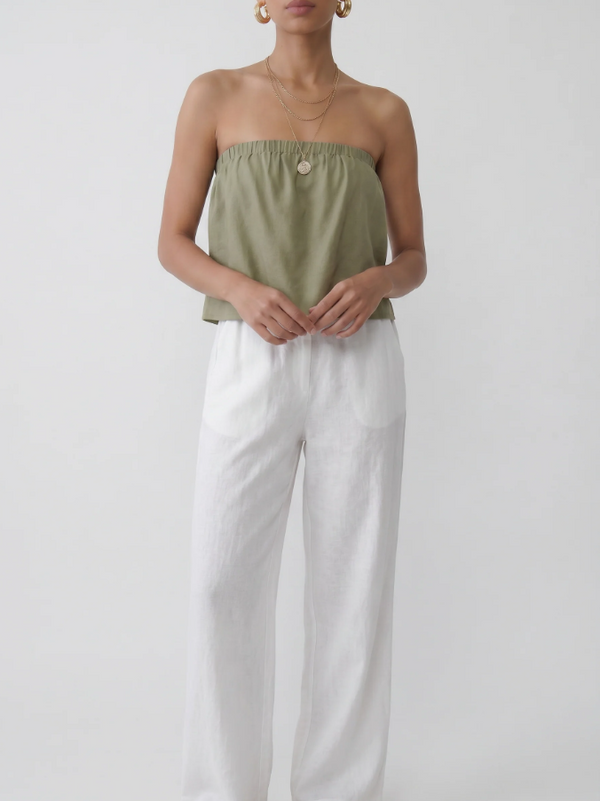
At Noumenon, Tencel (lyocell) is one of the core fabrics used in both the Noumenon own label and Cossac pieces. It's chosen specifically for the combination of qualities it offers: a fluid, elegant drape similar to silk, strong performance through washing, and one of the most traceable and low-impact production processes in textile manufacturing.
You'll find it in pieces designed for movement and layering — fluid tops, relaxed trousers, lightweight dresses. The feel is smooth and cool against the skin without being delicate or high-maintenance. It washes well on a gentle cycle at 30°C and can be air-dried flat.
For a full overview of the materials we use and why, see our Fair About Fabrics page — including how lyocell and Tencel compare to the other fibres in our collection: cupro, ramie, organic cotton, and linen.
Frequently asked questions
Q: Is Tencel the same as lyocell?
A: Not exactly. Lyocell is a generic fibre type made from wood pulp cellulose using a closed-loop solvent process. Tencel is a brand name owned by Lenzing AG for lyocell and modal produced under Lenzing's specific sustainability and quality standards. All Tencel is lyocell or modal — but not all lyocell or modal is Tencel. The Tencel label adds third-party verified sustainability credentials to the generic fibre category.
Q: Is lyocell or modal better for sensitive skin?
A: Both are hypoallergenic and generally well-tolerated by sensitive skin. Modal is typically softer and more flexible, making it the preferred choice for close-to-body garments like underwear or loungewear. Lyocell is slightly more structured and better suited to outerwear and dresses. Neither contains the harsh chemical residues often found in conventional cotton or synthetic fabrics.
Q: Can I machine wash lyocell and Tencel?
A: Yes, with care. Both lyocell and Tencel lyocell wash best on a gentle or delicate cycle at 30°C. Avoid tumble drying — air drying flat preserves the fabric's drape and prevents shrinkage. Modal is slightly more resilient to washing and can generally tolerate a slightly warmer wash, but delicate is always safer for longevity.
Q: Is lyocell better than cotton?
A: For sustainability, lyocell has a meaningful advantage over conventional cotton: it requires significantly less water, no pesticides when sourced from eucalyptus, and its production waste is minimal in a closed-loop system. Conventional cotton is one of the most water- and chemical-intensive crops in textile production. Organic cotton closes some of that gap, but lyocell still generally wins on production footprint.
Q: What is viscose, and how does it differ from lyocell?
A: Viscose (also called rayon) is an older cellulose-based fibre made from wood pulp using a highly chemical-intensive process involving carbon disulphide — a toxic solvent. Unlike lyocell's closed-loop system, viscose production discharges significant chemical waste. Both fibres are plant-based and biodegradable, but lyocell's production process is substantially cleaner. If you see "viscose" on a label marketed as sustainable, treat that claim with scepticism.
Q: Why do some brands call it Tencel and others call it lyocell?
A: If the fibre was produced by Lenzing AG, the brand will typically use the Tencel trademark because it signals verified sustainability credentials. If the fibre was produced by a different manufacturer using the same lyocell process, they'll use the generic term "lyocell". Both can be sustainable — but Tencel comes with verified proof.
0 reacties