



If you've started questioning your fast fashion habits, you've probably noticed the problem: the moment you stop buying from ASOS, Zara, or H&M, it's not immediately obvious where to go instead. The ethical fashion space can feel overwhelming, full of brands making big claims, certification logos you don't recognise, and price tags that feel like they need some justification.
This guide cuts through that. We've pulled together the best ethical alternatives across different categories, from everyday basics to statement jewellery to shoes that last, along with an honest explanation of what makes each one actually worth your money. No greenwashing. No vague sustainability claims. Just brands we stand behind and the reasons why.
What's actually wrong with ASOS, Zara, and H&M?
It's worth being specific, because "fast fashion is bad" has become such a common refrain that it's starting to lose meaning.
ASOS produces thousands of new styles every week, designed to be bought, worn a handful of times, and replaced. The business model relies on volume and low cost per item, which means constant pressure on fabric quality, production speed, and supplier wages. Their sustainability commitments exist on paper, but third-party audits have repeatedly flagged concerns about labour conditions in their supply chain.
Zara's parent company Inditex is the world's largest fashion retailer. The brand pioneered the fast fashion model: design to shop floor in two weeks, collections refreshed twice a week. The speed of this model generates enormous textile waste. In 2022, Zara pledged to use 100% sustainable fabrics by 2025, a deadline they have not met in full.
H&M's Conscious Collection was one of the most high-profile greenwashing cases in recent fashion history. In 2023, the Norwegian Consumer Authority found that H&M's sustainability claims were misleading to consumers. The company has since revised its marketing language, but the underlying business model, produce more, sell cheaper, repeat, hasn't fundamentally changed.
None of this means you're a bad person for having shopped there. These brands are accessible, affordable, and genuinely good at what they do aesthetically. The point isn't guilt. It's that there are now real alternatives that don't require you to compromise on style, fit, or your budget as much as you might think.
The ethical alternatives, by category
For everyday basics: By Signe
By Signe is a Danish fashion brand founded in 2015 by Signe Rødbro that creates honest, feminine easywear using GOTS-certified organic fabrics produced in the brand's own ethical atelier in Turkey. Unlike most sustainable brands that outsource to third-party certified factories, By Signe controls its entire production in-house, which means genuine transparency over working conditions, wages, and material quality.
The aesthetic is quiet and considered: clean lines, natural colours, well-cut basics that don't shout for attention but photograph beautifully. Think the kind of wardrobe that makes getting dressed easier, not harder.
By Signe's organic cotton tops and trousers occupy the same wardrobe slot as H&M's basics, but made to last years rather than seasons. The cost per wear is significantly lower when you account for how long the pieces hold up.
For contemporary womenswear: Cossac
Cossac is a sustainable womenswear brand built around the capsule wardrobe philosophy, designing transeasonal, contemporary pieces intended to be worn across multiple seasons rather than discarded after one. Every garment is sustainably designed and ethically produced, with a focus on quality fabrics and cuts that age well.
The brand sits stylistically between the accessible edge of ASOS and the restraint of a luxury label. Contemporary silhouettes, interesting details, nothing that looks like it was designed to photograph once on Instagram and then fall apart. Cossac is particularly strong on fluid separates, draped pieces, and elevated basics in natural fibres like cupro and linen.
It covers the same territory as ASOS's better end, contemporary, wearable, trend-aware, but without the waste built into the model. The pieces hold their shape and colour wash after wash.
For timeless European design: Noumenon own label
Noumenon is an Amsterdam-based fashion label founded by Dena Simaite with a single, clear idea: that ethics and aesthetics are not opposites. Inspired by the Kantian concept of the noumenon, the thing as it truly is beyond surface appearances, the brand creates cruelty-free, vegan garments that are sophisticated without being showy. Every fabric is sourced in Europe to minimise CO₂ from transport, and the collection works entirely in natural and low-impact fibres: linen, organic cotton, cupro, and Tencel.
The result is a wardrobe of timeless pieces, soft blouses, tailored trousers, fluid dresses, designed for the woman who wants to feel as good in what she's wearing as she feels about having bought it.
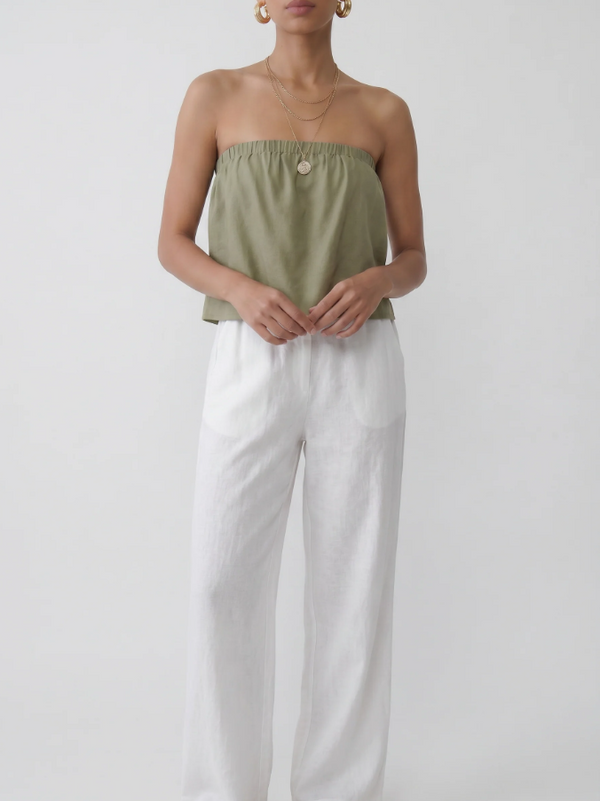
What makes the Noumenon label genuinely unusual is the philosophical coherence behind it. Most fashion brands have a mood board. Noumenon has a worldview. The name itself is a commitment: to look beneath the surface of the fashion industry and build something honest underneath. Where Zara's strength is trend-responsive design at accessible prices, Noumenon's answer is deliberately trend-resistant design at a comparable price point, made to be worn for years rather than one season. The Agnes Trousers or the Ruffle Tube Top won't look dated next year. That's the entire point.
For shoes: Veja
Veja is a French footwear brand founded in 2004 that produces sneakers using organic and fair-trade materials, including wild Amazonian rubber for soles and organic cotton from Brazil. Veja is one of the most transparent brands in sustainable fashion, publishing detailed supply chain information and refusing to spend on traditional advertising. Their marketing budget goes into production quality instead.
The brand has become something of a cultural touchstone for conscious dressing, worn by everyone from royalty to off-duty models. Their sneakers hold their resale value, are genuinely durable, and work across a wide range of outfits from casual to smart-casual.
Zara's footwear is produced to a price point that rarely survives a full year of regular wear. A pair of Veja sneakers, worn regularly and cared for properly, will last three to five years. The upfront cost is higher. The lifetime cost is lower.
For jewellery: Wildthings Collectables
Wildthings Collectables is an Amsterdam-based jewellery brand founded in 2016 by Leanne Jacometti that designs in Amsterdam and produces entirely by hand in Bali using 100% recycled sterling silver and 60% recycled brass. Every piece is made by local craftspeople under fair working conditions, fair wages, regular hours, maternity leave, and access to childcare, with full production oversight by the Wildthings team.
The aesthetic is bold and individual: edgy pieces with a Balinese-Amsterdam crossover sensibility, designed for people who treat jewellery as an expression of character rather than an afterthought. The pieces are sold in over 200 stores across Europe, including the Bijenkorf in the Netherlands.
High street jewellery is typically brass or zinc alloy with a thin plating that tarnishes within weeks. Wildthings pieces are built from real materials, sterling silver that ages beautifully or thick gold plating on recycled brass, and they're actually unique. Not the same ring that three other people at the party are wearing.
Shop Wildthings Collectables at Noumenon
For swimwear: Kaly Ora
Kaly Ora is a sustainable swimwear brand producing reversible, mix-and-match pieces designed to give you twice the wardrobe for half the items. Each piece is designed to be worn two ways, which directly reduces the consumption footprint of your swimwear wardrobe.
Fast fashion swimwear is one of the worst categories for durability. Chlorine, salt, and UV exposure destroy cheaply made elastane blends within a single season. Kaly Ora's construction is designed to hold up across multiple summers.
For handcrafted statement pieces: Sisterhood
Sisterhood produces small-batch, handcrafted clothing with a distinctive character, pieces that are impossible to find at any high street retailer precisely because they're not made at high street scale. There is no Sisterhood equivalent at H&M or Zara. The whole point is uniqueness: garments made by hand, in small quantities, that won't be replicated at scale. This is the part of your wardrobe that doesn't look like anyone else's.
Why buying from a curated boutique is structurally different
One thing worth naming directly: buying from a curated multibrand boutique like Noumenon is structurally different from buying from a large fast fashion retailer, even if the individual prices look similar.
When you buy from ASOS, your money goes into a machine specifically designed to generate the next thing you'll want to buy. The business model depends on your dissatisfaction with what you already own.
When you buy from a small curated boutique, a few things happen that don't happen on ASOS.
The brands you support actually need your purchase. Wildthings Collectables, By Signe, Cossac; these are not subsidiaries of a multinational. A sale matters. It determines whether they can produce a next collection, pay their craftspeople, or stay in business.
The curation does work you'd otherwise have to do yourself. Finding By Signe, Cossac, and Kaly Ora independently, verifying their sustainability credentials, understanding the fabrics takes significant research. A good boutique has already done that work and staked its reputation on the results.
You get access to things that aren't widely distributed. Several of the brands we stock at Noumenon are not available in large retailers. If you want them, you buy them from the independent boutiques that sought them out.
A note on price
The honest answer to "why is ethical fashion more expensive?" is that the real cost of making clothes is more than fast fashion charges you.
A €15 H&M dress is not cheap to make. It's cheap to buy because the costs, environmental damage, underpaid labour, subsidised synthetic materials, are paid by someone else, somewhere else, later. The price doesn't reflect the full cost. It just hides it.
Ethical brands charge what things actually cost to make responsibly. That's not a premium. It's an accurate price.
The affordability gap is real though, and it shouldn't be dismissed. A few practical ways to navigate it:
Buy fewer, better pieces. One €120 Cossac top worn 80 times costs less per wear than a €30 ASOS top worn 8 times.
Start with one category. Swap shoes first, or jewellery, or swimwear. You don't have to overhaul your wardrobe in one go.
Think in cost per wear. Divide the price by how many times you expect to wear it. Ethical pieces almost always win over a 12-month horizon.
Buy second-hand. Veja, Cossac, By Signe all hold their quality well and appear regularly on Vinted, Vestiaire Collective, and Depop.
Frequently asked questions
Q: Is ethical fashion actually more sustainable, or is it just marketing?
A:It depends on the brand. The most reliable signal is third-party certification: GOTS for fabrics, B Corp for company practices, and supply chain transparency reports. Brands that publish specific information about their factories, wages, and material sourcing are more trustworthy than brands that use vague language like "eco-conscious" or "responsible". All brands stocked at Noumenon are vetted against these criteria. See our Fair About Fabrics page for the detail.
Q: Is H&M's Conscious Collection a good sustainable alternative?
A: No, and it's worth understanding why. H&M's Conscious Collection uses a small proportion of more sustainable materials within an otherwise unchanged fast fashion business model. The Norwegian Consumer Authority ruled in 2023 that H&M's sustainability claims were misleading. A collection labelled "conscious" within a brand producing billions of garments per year is a marketing category, not a sustainability solution.
Q: What is the most sustainable thing I can do with my wardrobe right now?
A: Wear what you already own. The most sustainable garment is always the one that already exists. After that: repair before replacing, buy second-hand before buying new, and when buying new, choose brands with verifiable sustainability credentials and fabrics that biodegrade or can be recycled.
Q: Can I actually find unique pieces through ethical brands, or does it all look the same?
A: This is probably the most persistent misconception about sustainable fashion. The brands in this guide, Wildthings Collectables, Cossac, Sisterhood, By Signe, are all genuinely distinctive. The homogeneity problem is actually worse in fast fashion, where trend cycles cause every retailer to stock identical silhouettes simultaneously. Small, independent brands tend to have a much stronger aesthetic identity precisely because they're not following the same trend reports.
Q: Where can I shop all these brands in one place?
A: At Noumenon, a curated multibrand boutique based in Amsterdam stocking Cossac, By Signe, Veja, Wildthings Collectables, Kaly Ora, Sisterhood, and the Noumenon own label. All brands are vetted for ethical production, vegan credentials, and material quality.
0 Kommentare